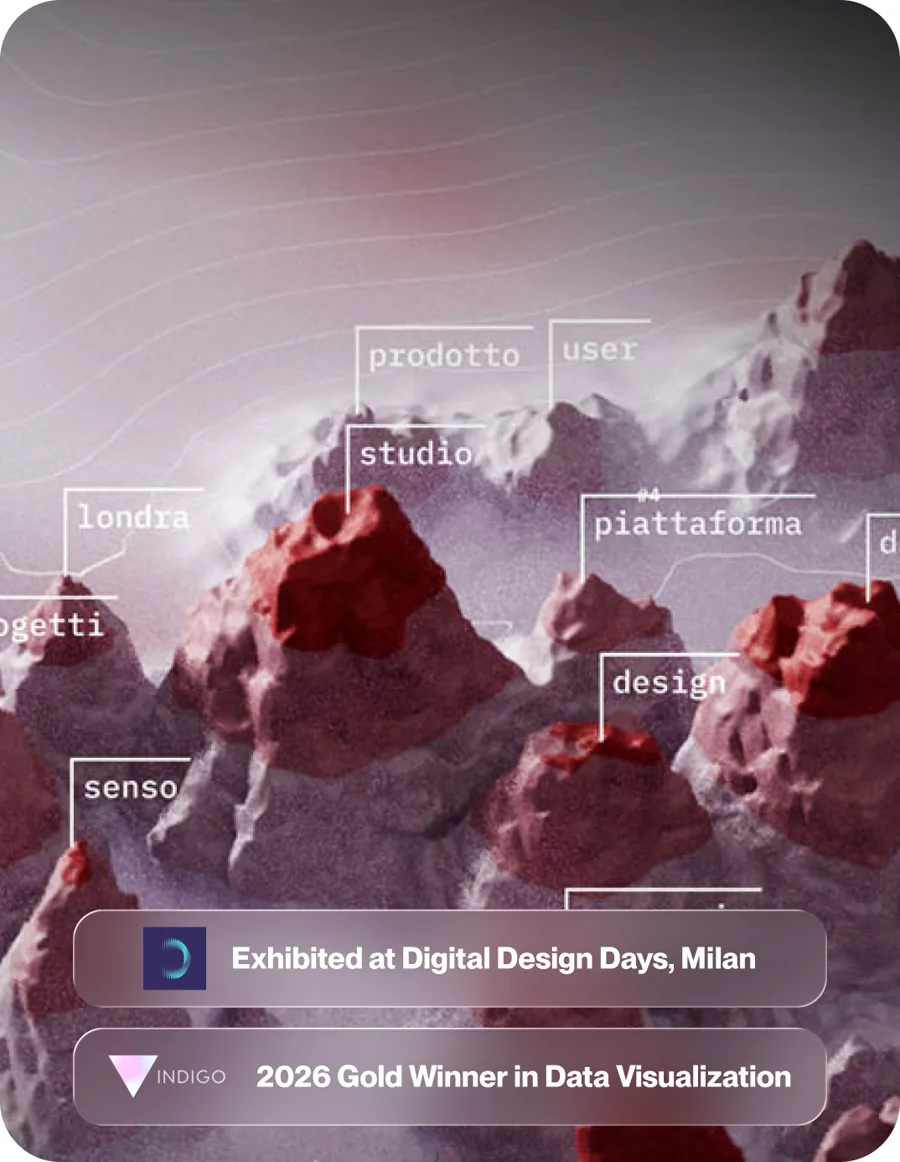
How do you reward great speakers when you have no budget?
Starting point
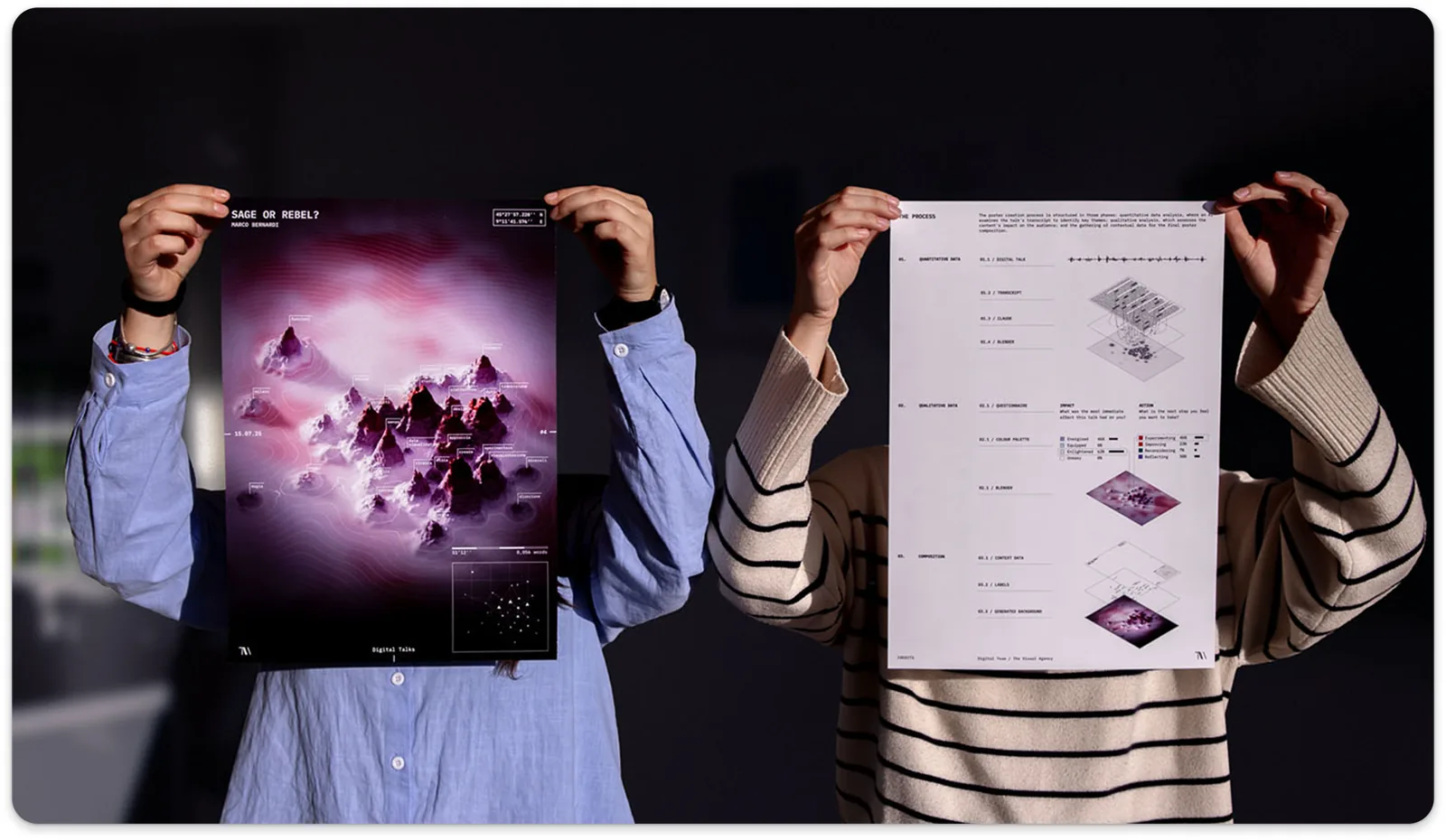
We created the Digital Talks: conversations with designers and industry professionals. Classic situation with great speakers and no budget. Trying to find a way to reward them, it clicked: what if the talk itself became the gift, through what we do well? Data visualization.
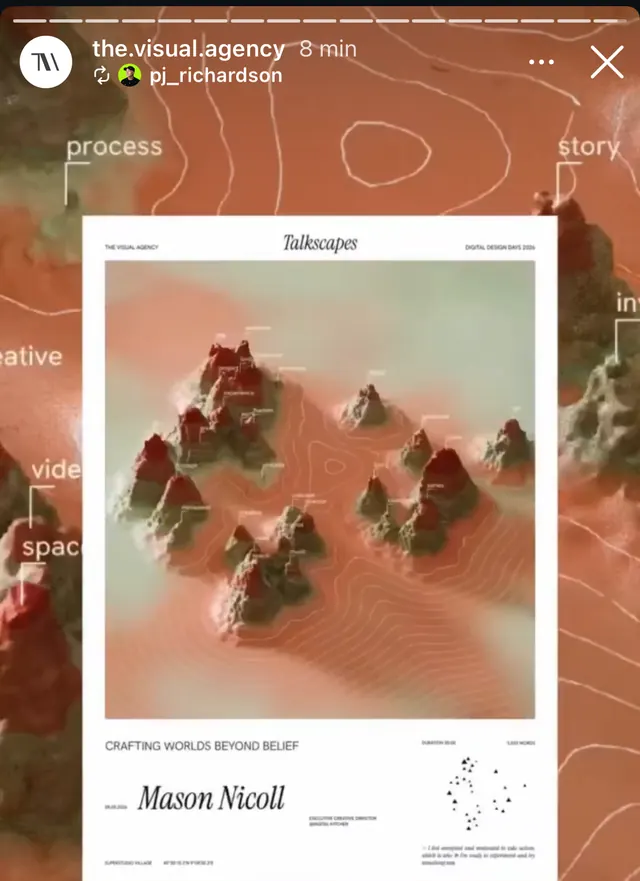
The idea: a generative data driven poster
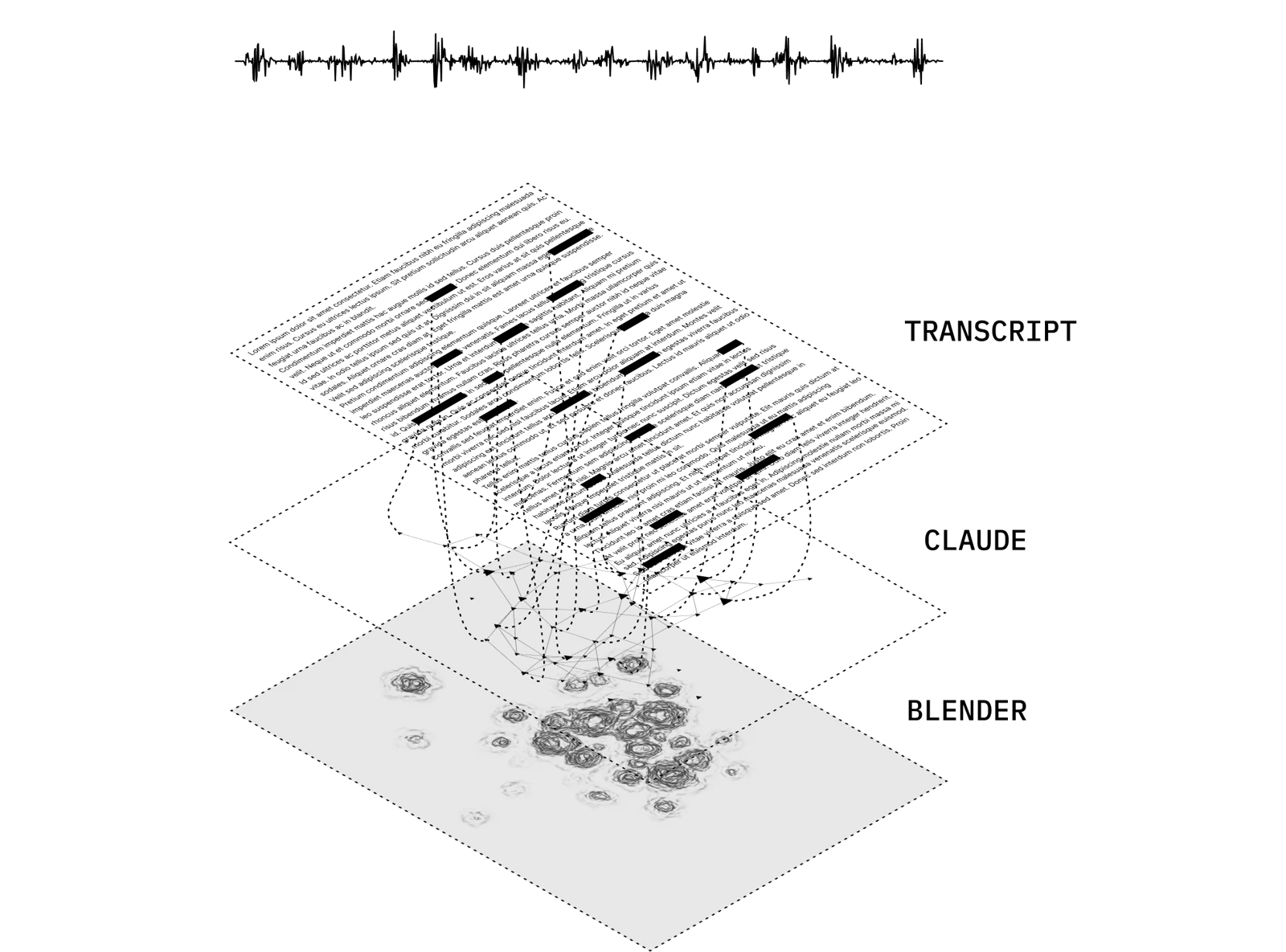
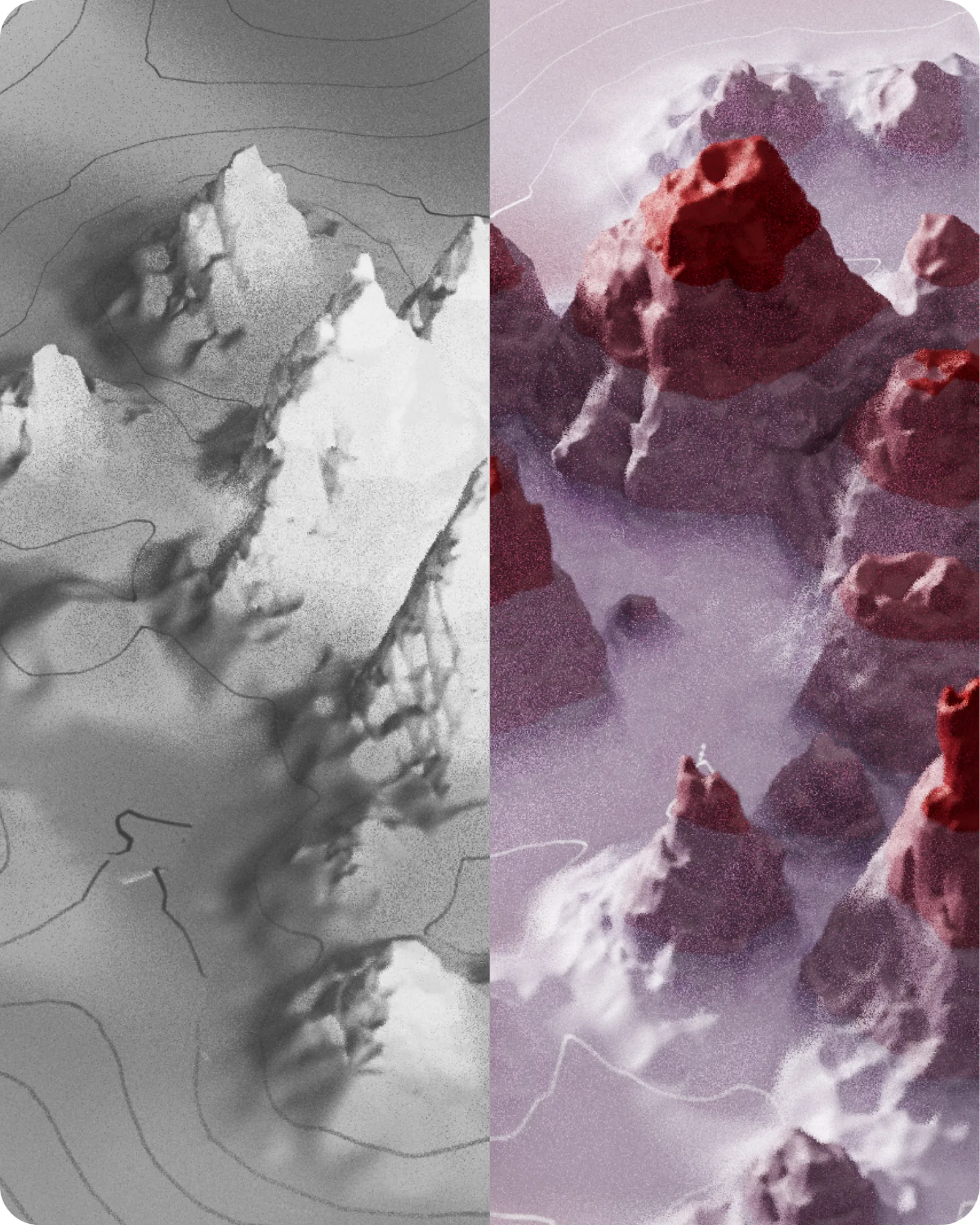
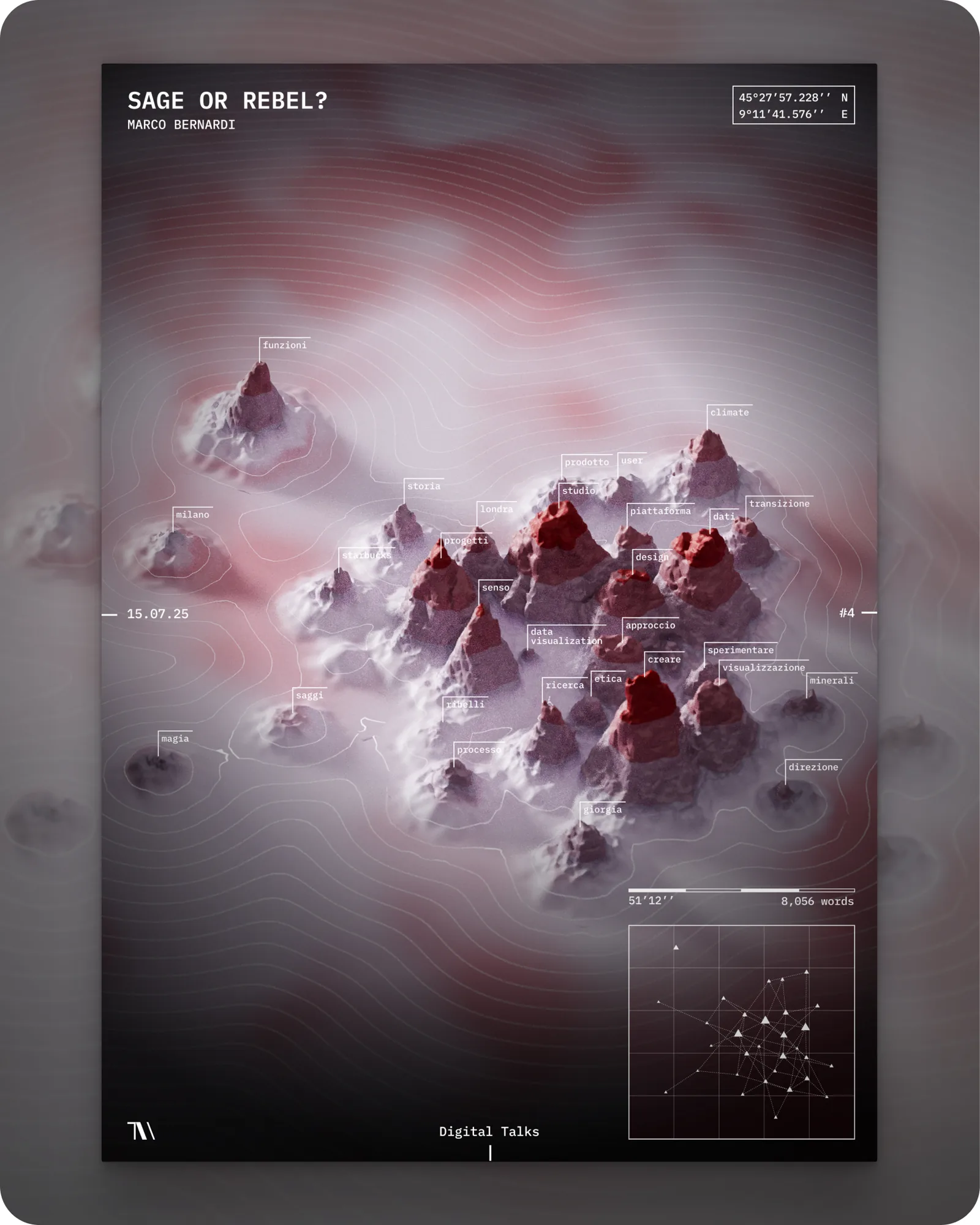
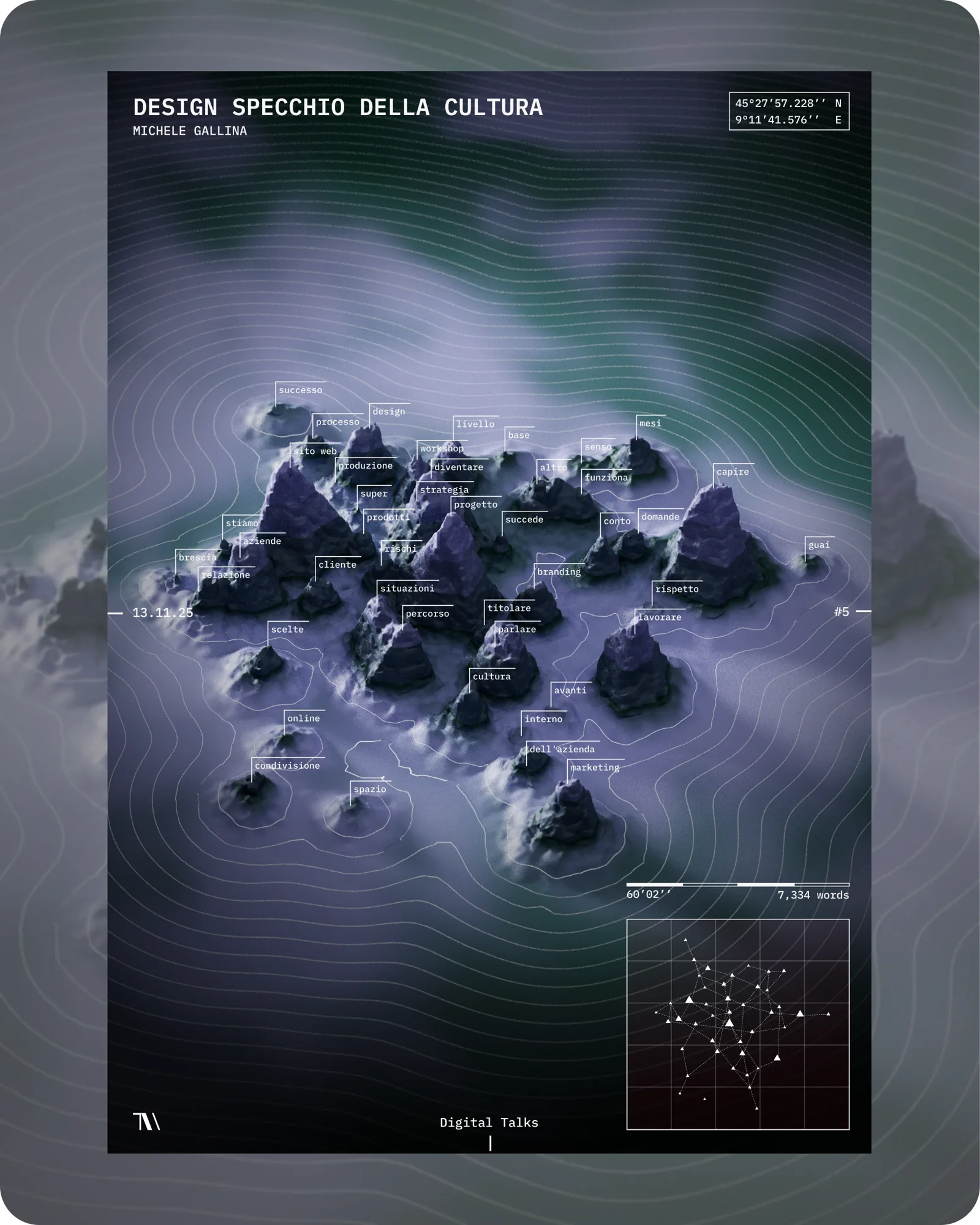
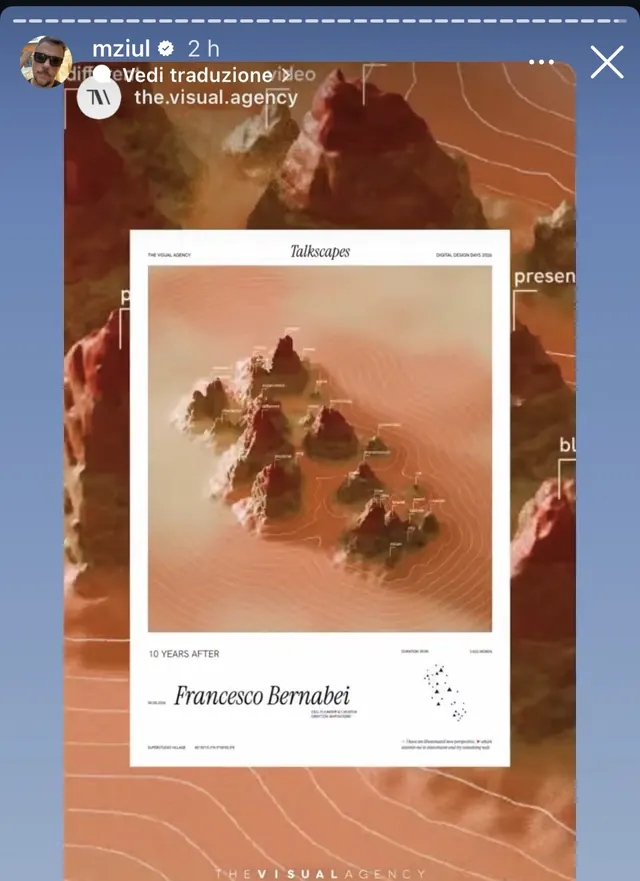
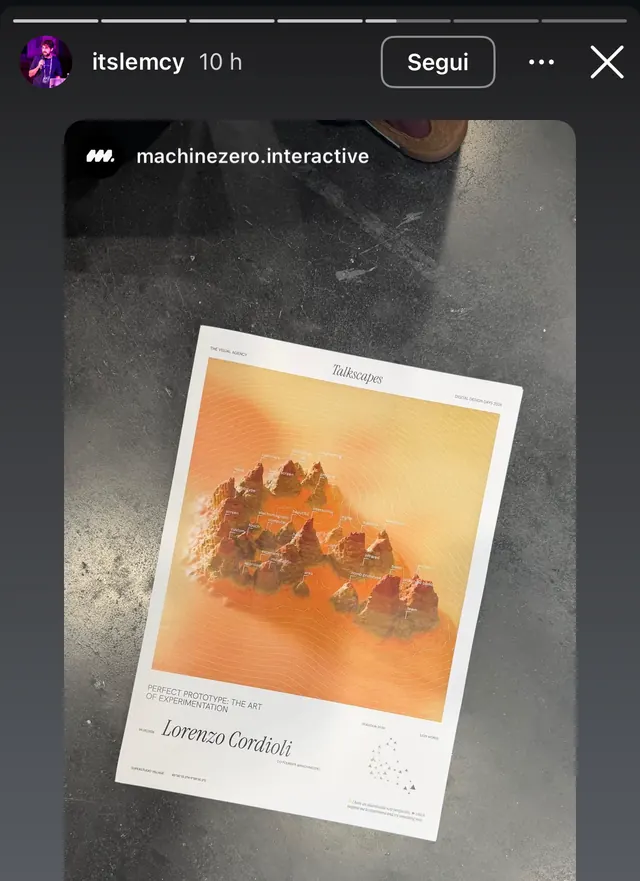
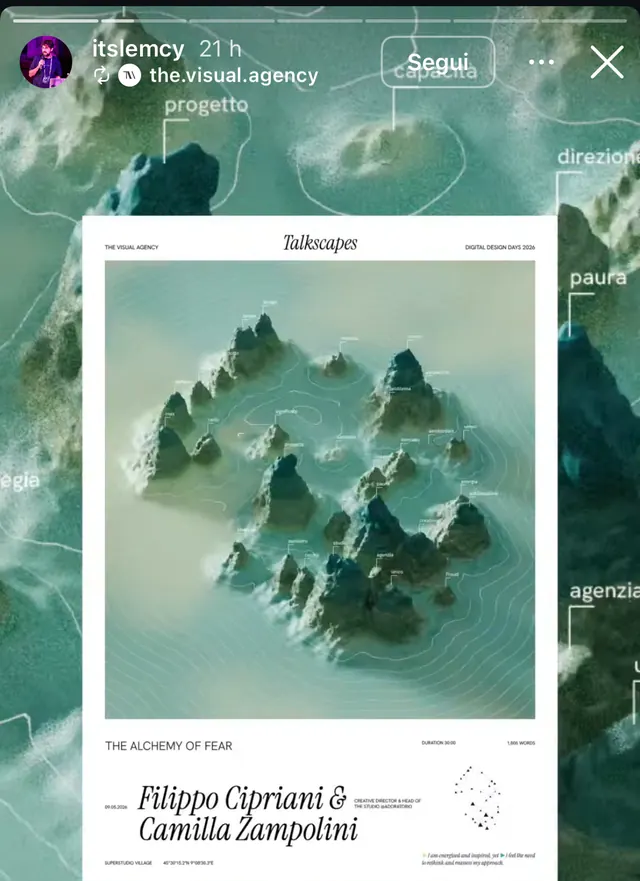
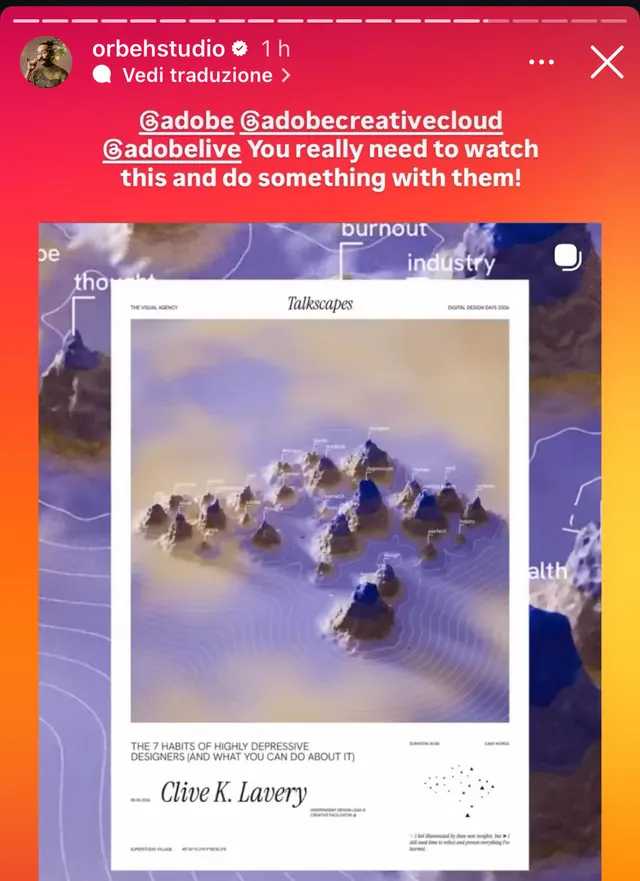
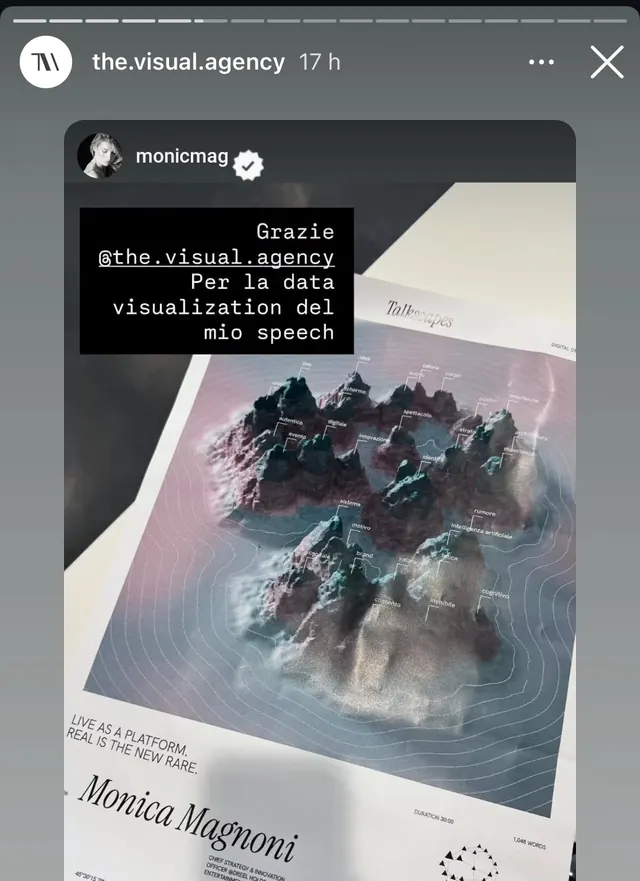
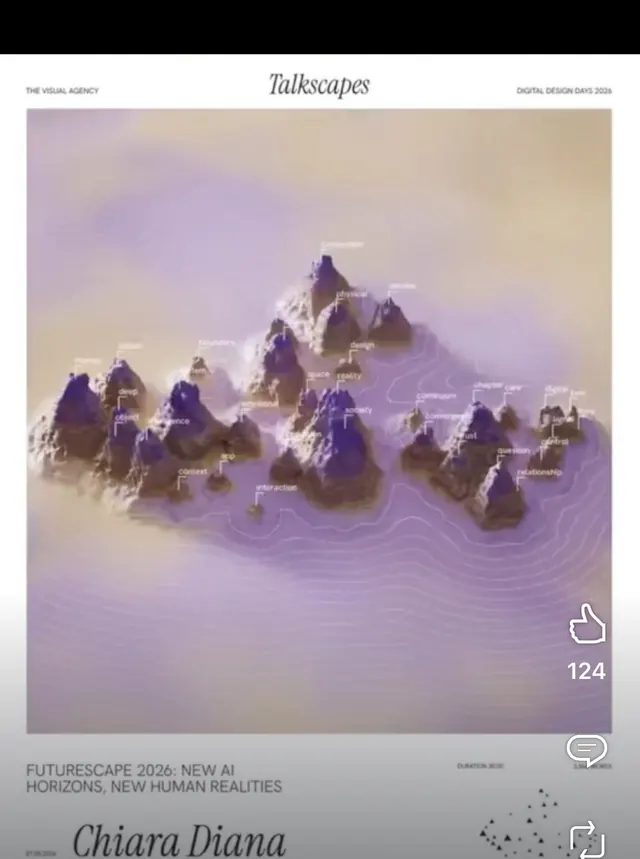
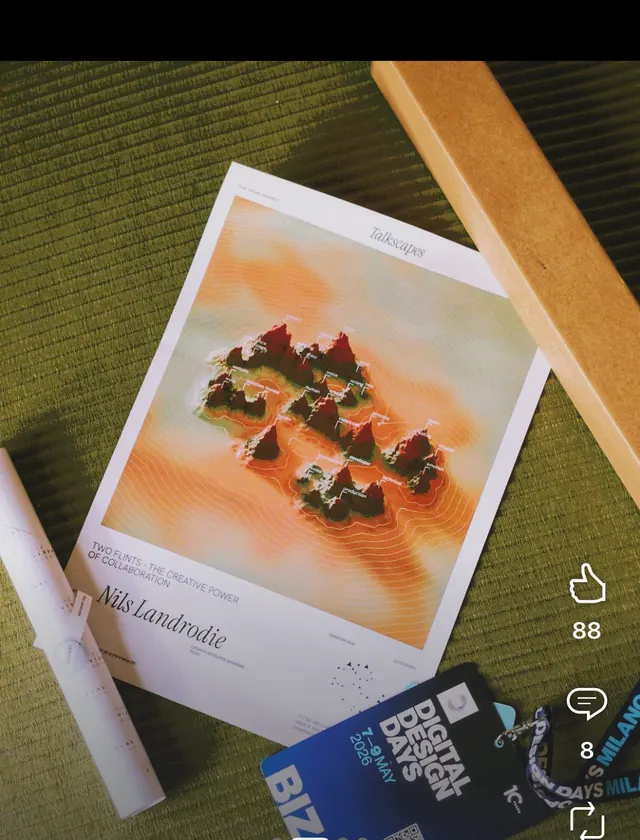
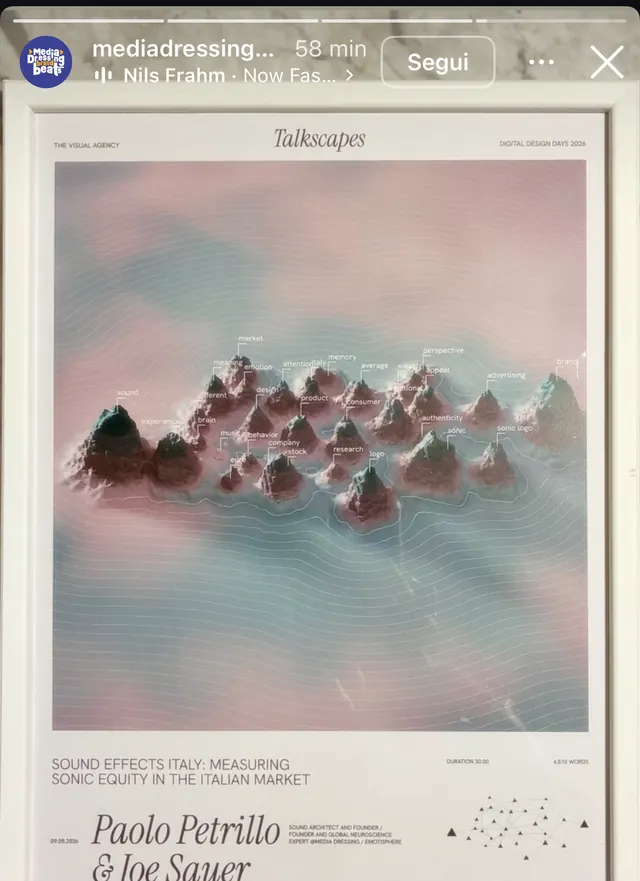
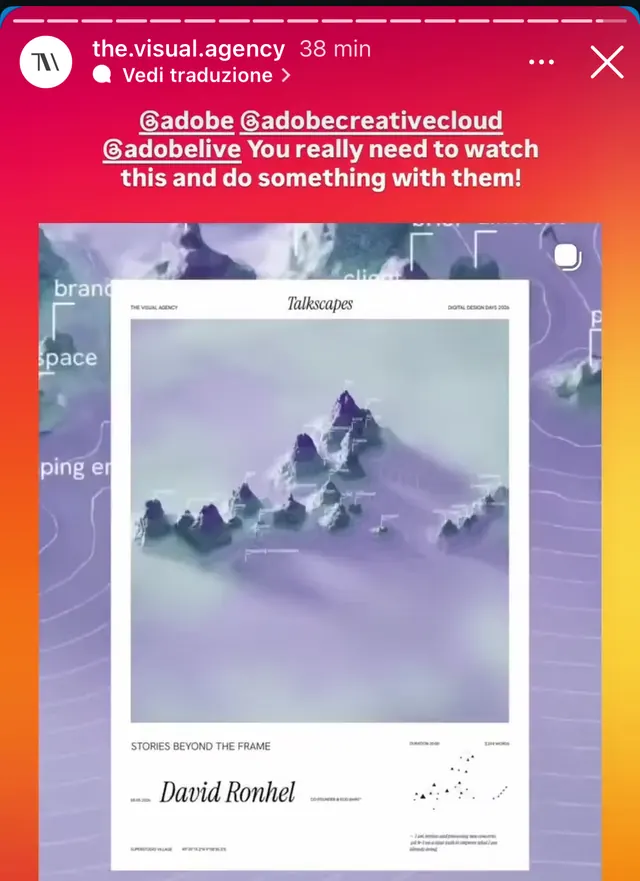
What was said translated into mountains. A custom text analysis tool, built on Claude, processes the talk transcription, strips filler words, and maps meaningful terms into a network of nodes. Word frequency defines mountain height. Conceptual proximity defines mountain ranges. The landscape is the structure of the ideas.
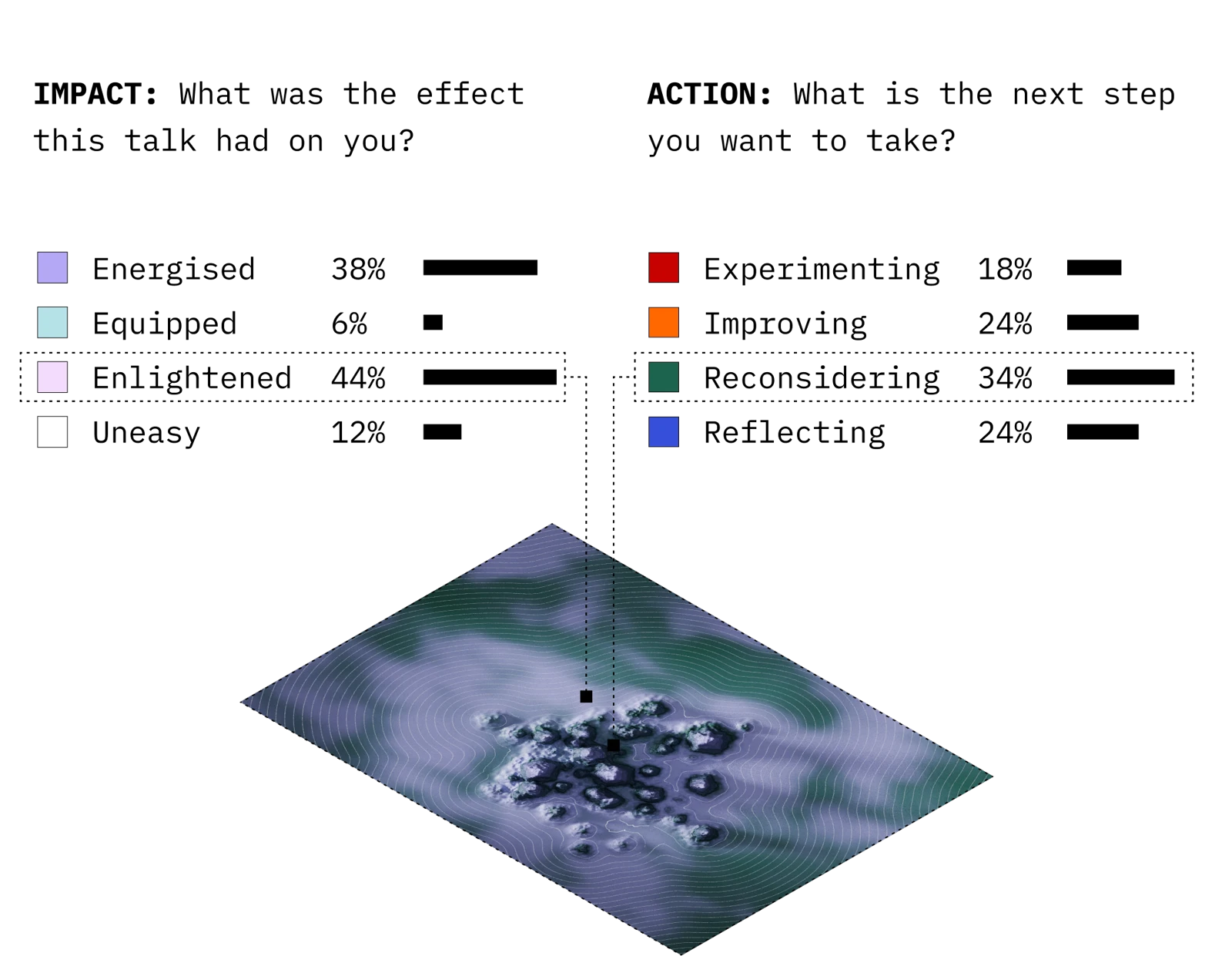
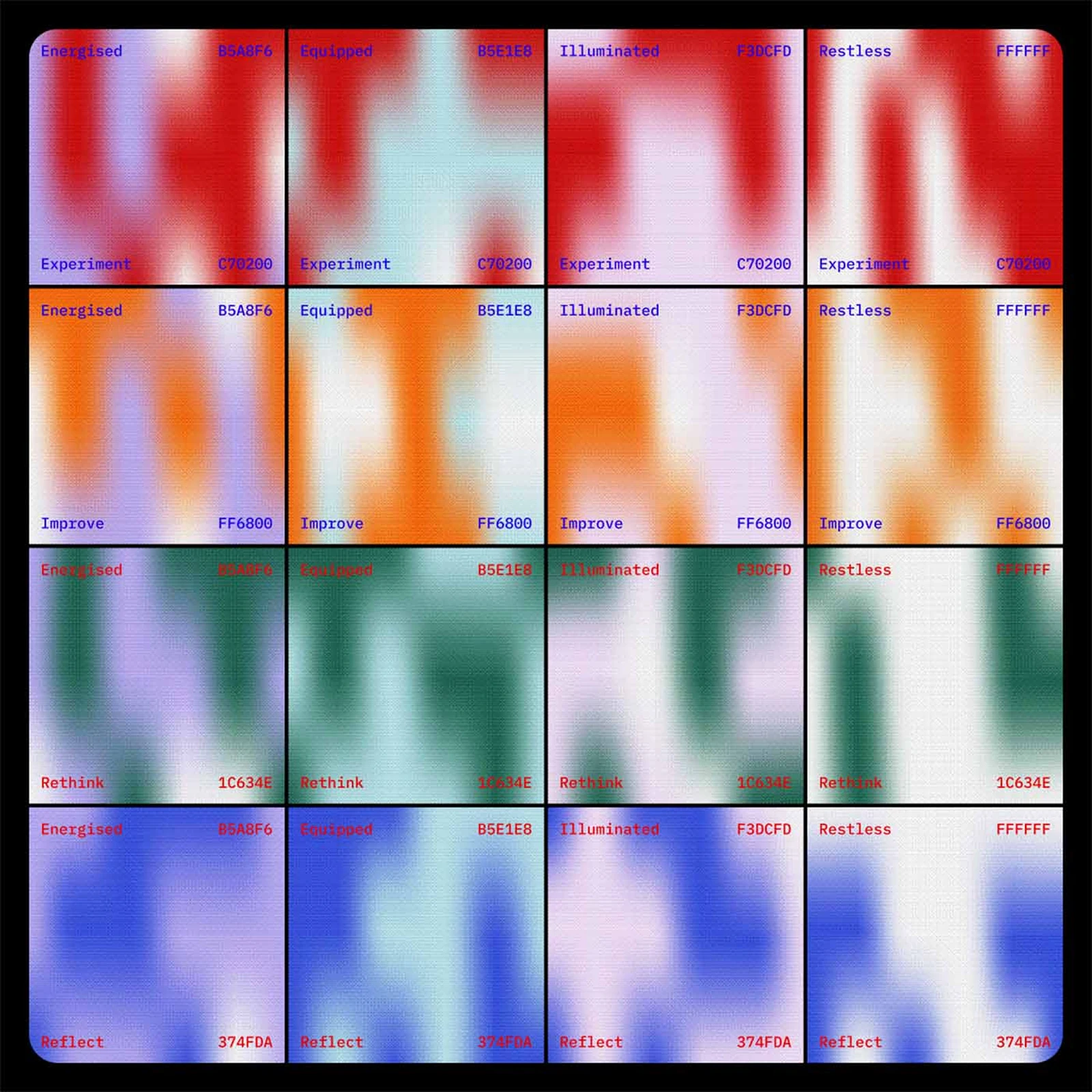
How it landed to the audience into colour. At the end of the talk, the audience answers two quick questions about their reaction, generating one of 16 possible color gradients that wash over the 3D geometry.
The tensions and tradeoffs
The first instinct was to track emotion in real time using AI. We dropped it: the model couldn't categorise emotions consistently. The solution came from that constraint: a short audience survey of two questions asked at the end of each talk, easy to collect.
The colour system took the longest. The gradients had to work with the mountains without competing with them, stay legible when posters are placed side by side, and keep the two survey dimensions distinct. The two question families follow distinct brightness logics, keeping the two emotional dimensions distinct.
The outcome
A workaround for a no-budget problem became an award-winning generative system. It won a Gold Indigo Award and was exhibited at Digital Design Days in Milan. Every poster is a trace of a specific conversation, on a specific day, with a specific audience.
Reposted by the speakers of Digital Design Days 2026
Last update 2026. All data are reserved. I authorize the processing of personal data according to EU Regulation 679/2016.